
Chiropractic care after a car accident
A collision puts forces through your neck and back that bodies are not built to absorb. Whether the wreck was yesterday or last month, an exam tells you what actually happened in there.
Why it matters
Why see a chiropractor after a car accident?
Plenty of people walk away from a wreck feeling fine and wake up stiff three days later. Adrenaline masks a lot in the moment, and the swelling around a strained joint or muscle takes time to build, often peaking a day or two after the impact. That is when the soreness, the headaches, and the tight neck tend to show up.
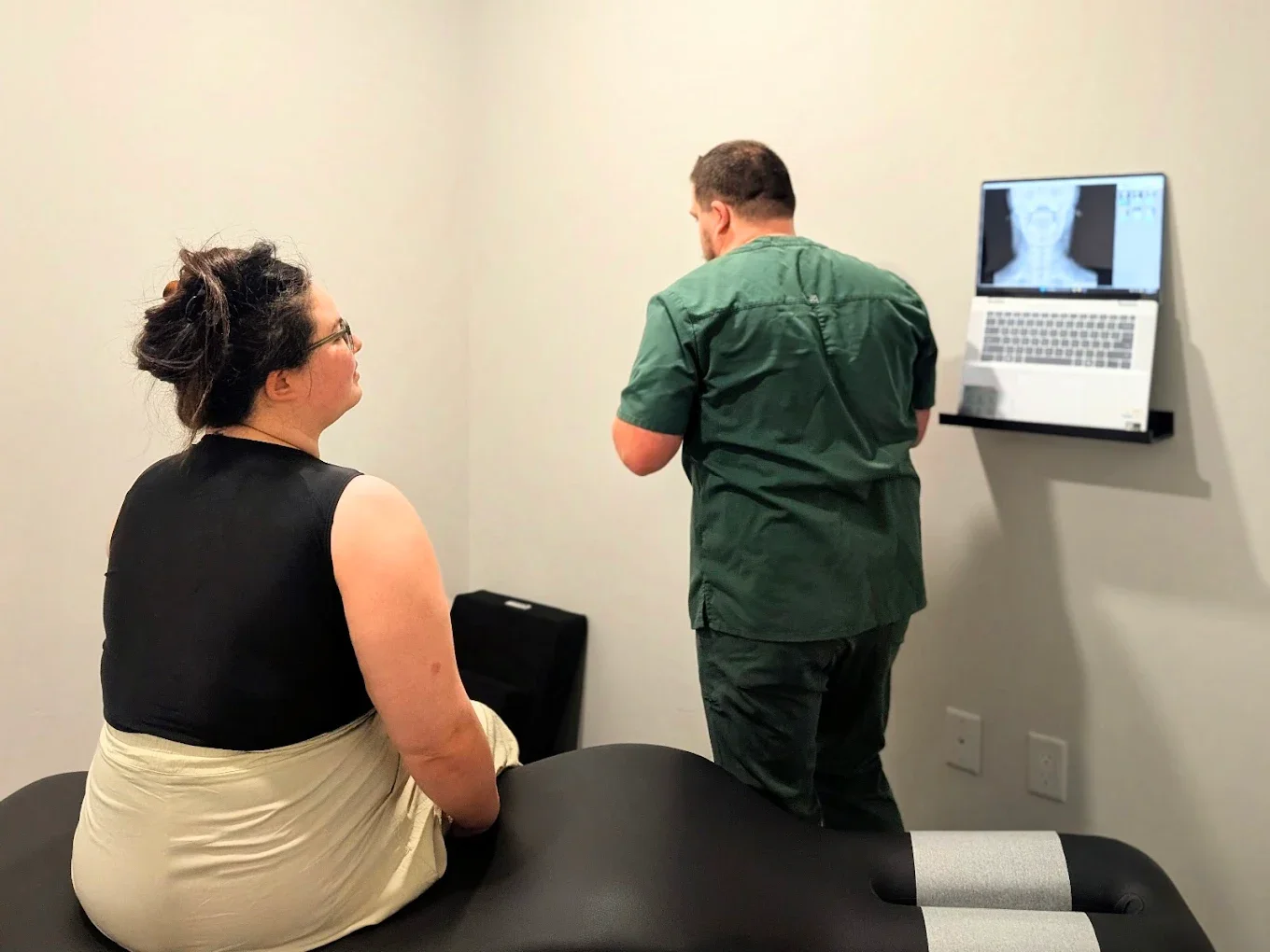
An exam in those early days gives you a clear picture before anything has a chance to settle in. We look at how your spine is moving, where the irritation is, and whether imaging makes sense, then we tell you honestly what we find. If you are already weeks past the crash, that is alright too. Late pain is still worth examining.

What we see
What injuries show up after a collision?
Most collision injuries are to the soft tissue and the joints of the spine, the kind that do not show up in a mirror but make themselves known over the following week.
Whiplash
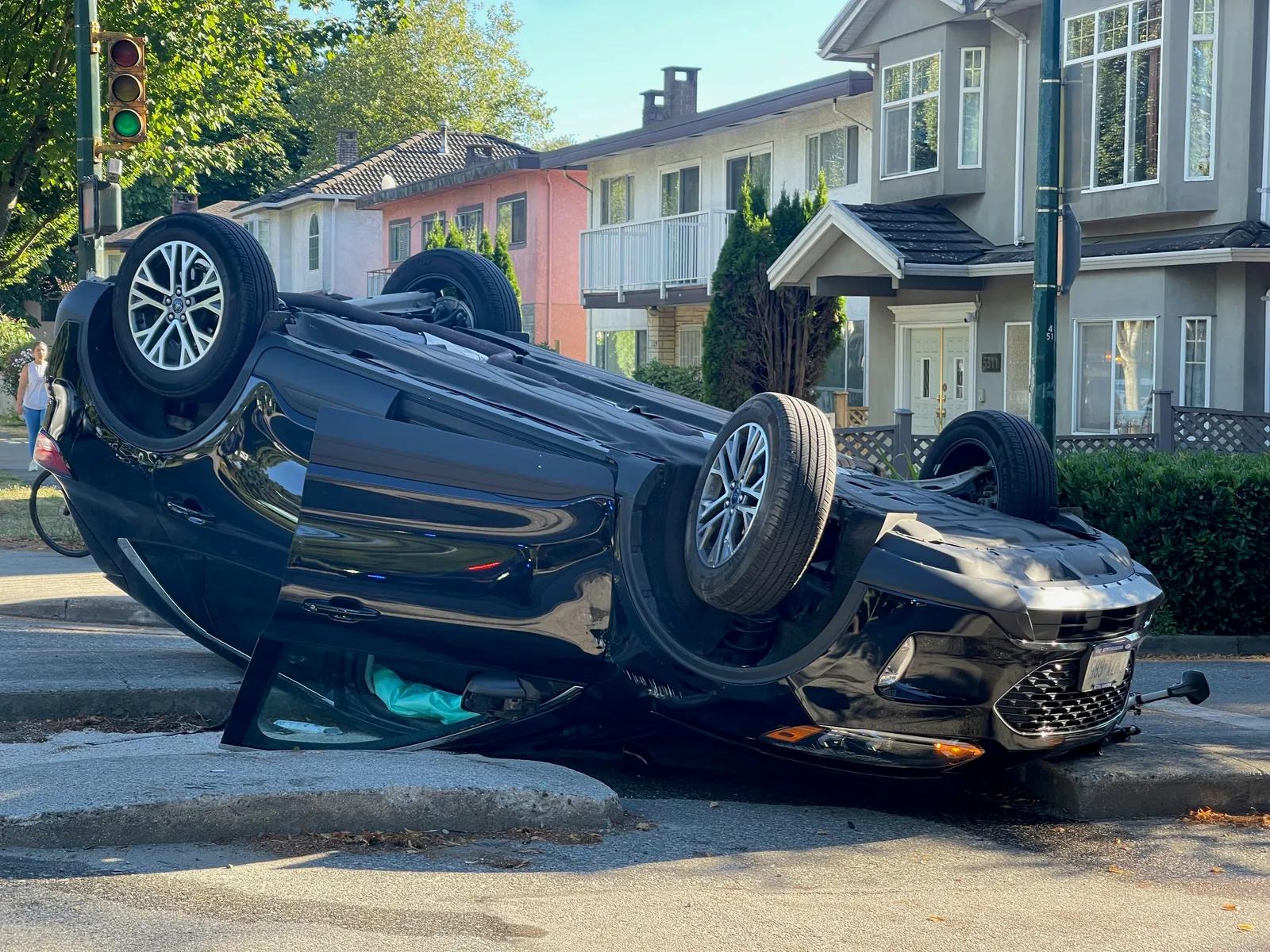
The most common collision injury, especially in rear-end wrecks. When the head snaps back and forward faster than the neck can brace, the joints, muscles, and ligaments take the strain. It often feels fine at the scene and tight a day or two later.
Neck and back pain
A crash drives force through the spine from an angle the body never planned for. That can leave the joints irritated and the surrounding muscles locked up, from the base of the skull all the way down to the low back.
Headaches and dizziness
Tension headaches that start at the back of the neck, along with lightheadedness or a foggy feeling, frequently trace back to an irritated upper neck after a wreck rather than to the head itself.
Soft-tissue strains
Strains and sprains are stretched or torn muscles, tendons, and ligaments. They rarely show on the outside, which is exactly why they get ignored until the swelling and stiffness set in over the following days.
Pinched nerves
Numbness, tingling, or a burning line down an arm can mean a nerve in the neck is being crowded by swelling or a shifted joint. That sensation is worth an exam, never a wait-and-see.
Bracing and seatbelt strain
Gripping the wheel and the snap of a seatbelt protect you in the moment, but they load the shoulders, ribs, and mid-back hard. Soreness through the chest and shoulders after a crash usually starts here.
One injury, many symptoms
Why does whiplash cause headaches and dizziness?
Whiplash is an acceleration-and-deceleration injury, meaning the head gets thrown one way and snapped back the other faster than the neck can keep up. That motion strains the small joints and ligaments of the upper neck, the same area where the nerves serving your head and the muscles that hold your skull steady all converge.
When those upper-neck joints get irritated and the muscles around them tighten up, the effects can spread well past the neck. A headache at the base of the skull, a foggy or lightheaded feeling, or tingling down an arm can all start there. It is one reason a wreck that seems to be about the neck can leave you feeling off in ways that are hard to pin down.
Whiplash is not only a car-wreck injury. The same forces show up in contact sports, which is why we treat whiplash and stingers in athletes the same careful way.
In the days after
What symptoms should you watch for after a wreck?
Symptoms can take hours or days to surface. These are the ones worth getting examined, even if they seem minor at first.
- Neck or back stiffness that builds over the days after the crash
- Headaches starting at the base of the skull
- Reduced range of motion when turning your head or twisting
- Tingling, numbness, or weakness down an arm or leg
- Dizziness, lightheadedness, or trouble concentrating
- Disrupted sleep or a deep, unshakable fatigue
Some symptoms cannot wait for an appointment
Weakness or spreading numbness in an arm or leg, a severe or worsening headache, confusion, trouble speaking or seeing, chest pain, or trouble breathing all call for emergency care right now. Those signs belong in an emergency room, not a chiropractor's office. Once you have been cleared, we are glad to take it from there.
Exam before adjustment
What does the first visit involve?
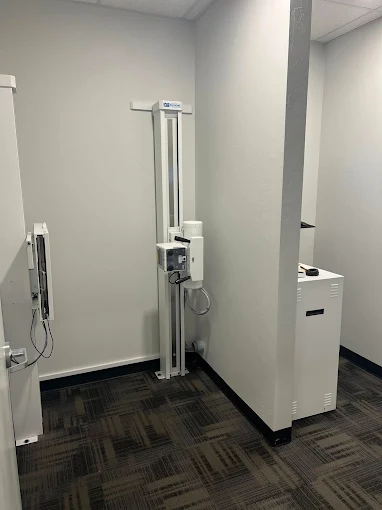
We start with your account of the collision: speed, direction of impact, where your head and hands were, what you felt then and what you feel now. Then a careful examination, X-rays when clinically indicated, taken in our own office, and a plain-language review of the findings before any care begins.
Treatment is gentle and adapted to how irritated things are; nothing is forced. If we find anything that needs a physician, imaging beyond our scope, or emergency attention, we tell you immediately and refer you. No referral is needed to be examined here, and we can usually see you same-day or next-day.
Curious about the full process and pricing? Read the first-visit walkthrough.
On the record
What about documentation and insurance?
Your exam findings, imaging, and care notes are recorded thoroughly from the first visit, which matters if an insurance claim is part of your situation. We keep clear records of the care we provide. We do not give legal advice, and we will point you toward the right professional when a question is outside what we do.
Asked and answered
Questions we hear after a wreck
How soon after a car accident should I see a chiropractor?
Within a few days is ideal, because soft-tissue swelling tends to peak in the 24 to 72 hours after a crash and an exam at that point catches what is happening early. That said, it is never too late. Whether the wreck was last week or last month, an exam still tells us what is going on.
I feel fine after my accident. Do I still need to get checked?
It is worth it. Adrenaline masks a lot at the scene, and soft-tissue injuries often surface gradually as the inflammation builds. A short exam gives you a clear baseline now, so a small problem does not get a head start while you wait to see if it settles.
Do I need a referral to be seen after a car accident?
No. You can book directly with us, and in most cases we can see you same-day or next-day. No referral is needed to be examined here.
Can a chiropractor treat whiplash?
Yes. Whiplash is one of the most common things we see after a collision. We examine the neck carefully, image it when that is clinically indicated, and use gentle hands-on care matched to how irritated the area is. Nothing is forced.
Is it safe to be adjusted so soon after a crash?
We examine before we treat, and the care is adapted to what we find rather than run to a fixed routine. If anything points to a fracture, a problem needing a physician, or imaging beyond our scope, we tell you right away and refer you out.
Do you handle documentation for an insurance claim?
We record your exam findings, imaging, and care notes thoroughly from the first visit, which matters if a claim is part of your situation. We document the care we provide. We do not give legal advice.
Recently in a wreck?
Call us. We will listen to what happened, tell you honestly whether an exam makes sense, and get you in quickly if it does.
$149 new patient offer: 2 visits including consultation, exam, and on-site X-rays.