
Chiropractic for kids in Moore, OK
The fussiness that won't settle. The ear infections that keep coming back. The sleep that never quite happens. These are the concerns parents actually bring us, and they deserve straight answers, not a sales pitch.
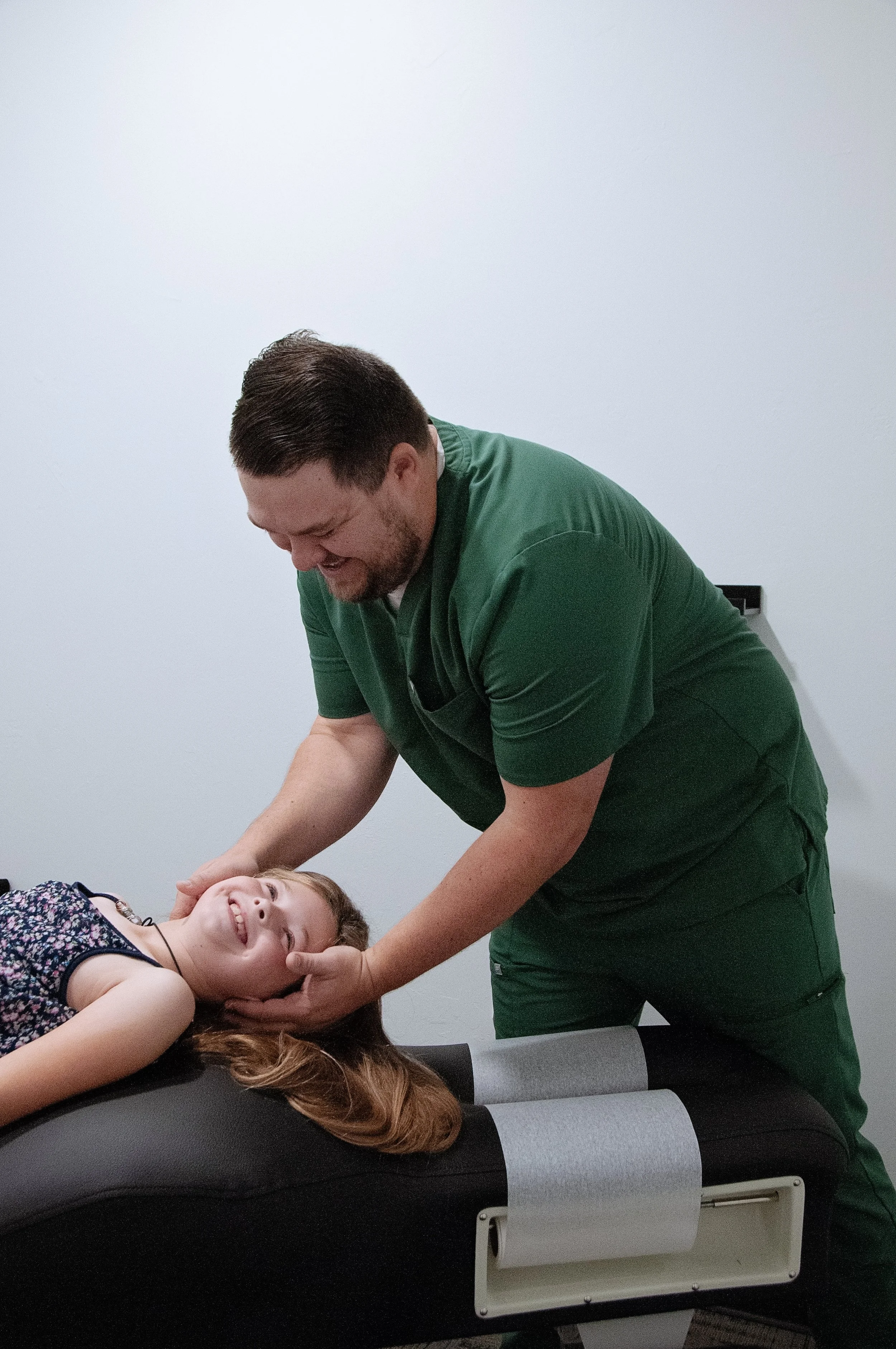
The everyday stuff
Why do parents bring their kids to a chiropractor?
Chiropractic doesn't treat these conditions directly; it supports the systems underneath them. That distinction matters, and we'll never blur it.
Colic and reflux
Gentle care may help calm the nervous system enough for feeding and digestion to settle.
Sleep struggles
Pediatric chiropractic is associated with improved sleep quality.
Recurring ear concerns
Inner-ear drainage depends on alignment around the upper neck.
Falls and sports impacts
Tumbles and rough landings stress a growing spine; gentle checks keep small misalignments from compounding.
Asthma and allergies
Parents often layer chiropractic alongside their pediatrician’s plan when respiratory concerns persist.
Mood and behavior
Regular care is associated with fewer behavioral issues, and kids themselves often describe feeling calmer.
The reframe that changes everything
Is it common, or is it normal?
“There's a difference between what's common and what's normal.”
Dr. Jake Edwards
In his words: “A normal child should grow up without being sick, not having a lot of fussiness. They should sleep through the night. They shouldn't deal with constipation. They shouldn't have ear infections all the time.”
“Most parents think, 'Oh, every kid gets this.' Not every kid should get that.” When these patterns show up again and again, Dr. Edwards explains, “there's something in the nervous system that's not functioning the way it's supposed to.” That's what a gentle pediatric assessment looks for.
The question under every other question
Is chiropractic safe for kids?
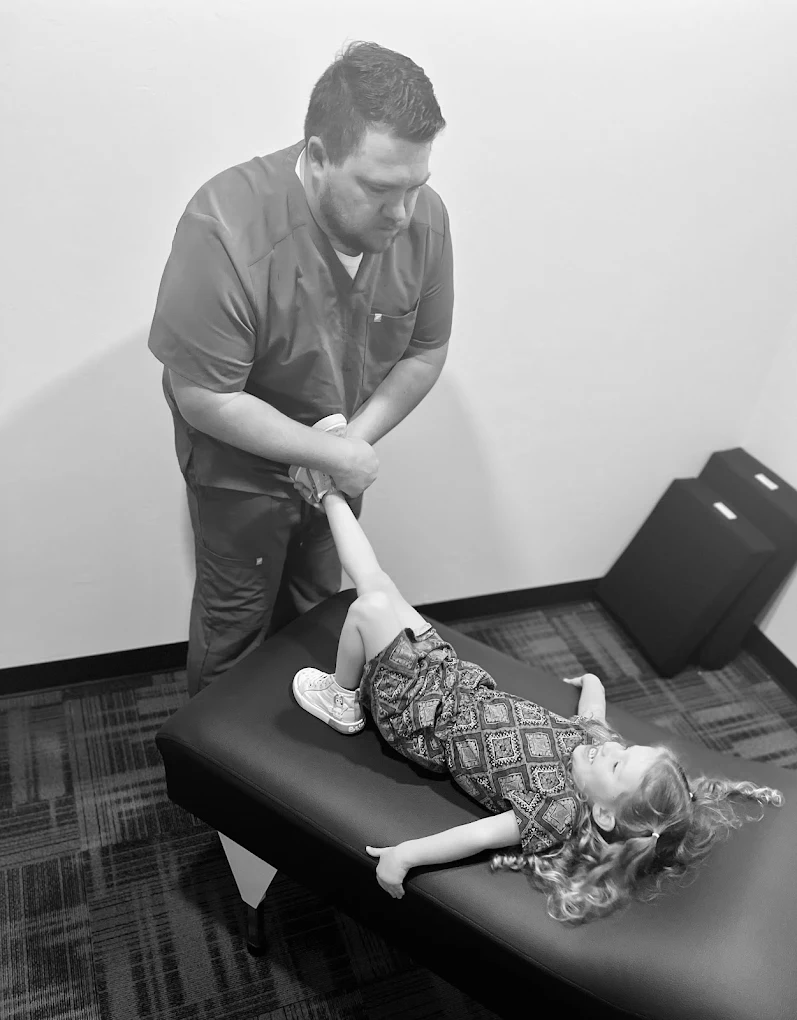
Yes. There are no known contraindications to chiropractic care for children when it's performed by trained professionals. Here's what that looks like in practice:
Ripe-tomato pressure
Pediatric adjustments use a fraction of adult force, often no more than the pressure you'd use to check a ripe tomato. No twisting, no cracking, nothing like an adult visit.
Care that matches the age
Assessment, technique, and visit length all change with the age and size of the child. An infant exam looks very little like a teen exam.
Trained for this, specifically
Dr. Edwards is Webster Technique® certified through the International Chiropractic Pediatric Association, with 10+ years in practice and more than 5,000 patients treated.
Imaging as a last resort
X-rays are almost never recommended for routine pediatric concerns, and never without explaining the reasoning first. Care plans shorten as sleep, feeding, and mood improve; families are never kept on a schedule.
“It feels like I am, like, in my room resting on my bed. Like, it feels really relaxing and calm.”
“Whenever I'm really energetic, it helps me calm down really fast.”
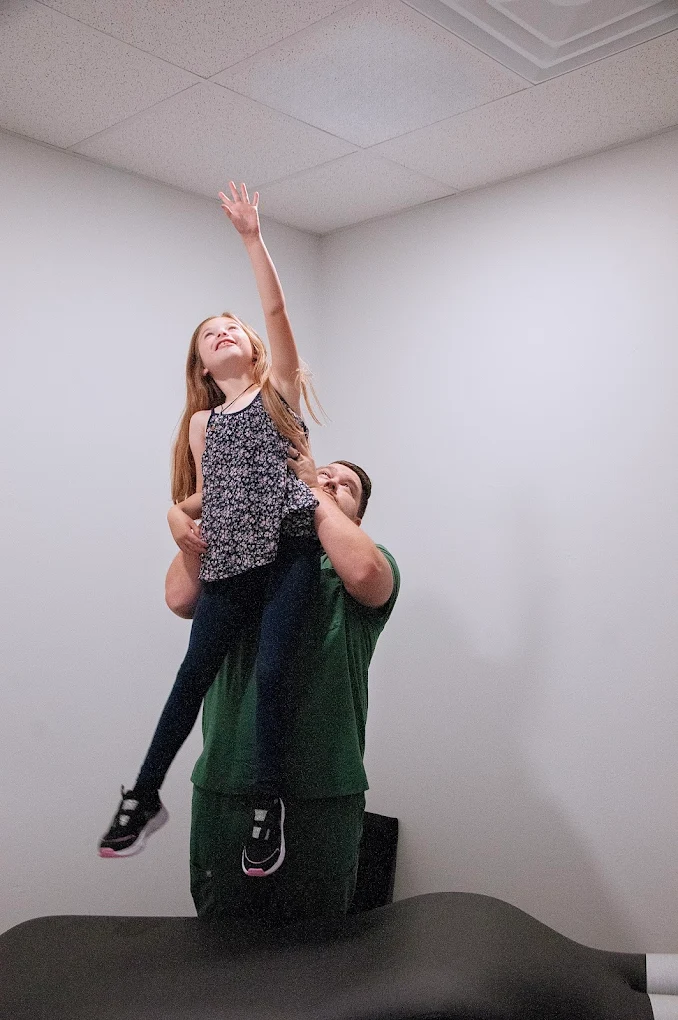
Starting at the start
Why check babies so early?
“It's important to get your baby checked soon after they're born because the birth process itself can be very traumatic,” Dr. Edwards explains. “That's with a natural birth, and then if we throw on top of that assisted deliveries, C-sections, forceps, vacuums, that increases the likelihood that there's gonna be some trauma, some damage, especially in the neck.” Not a reason for fear, just a reason to look.
“Babies can't tell you, 'Hey, that hurts. Don't do that.' And so then we grow up with those things, and they turn into other things as we age.” He's seen the early version of this up close: the youngest patient he's ever adjusted was his own daughter, about 30 seconds old, still attached to the umbilical cord. His other two girls, both C-section births, were checked between 15 minutes and a day old.
And his observation from a decade of practice: “If we can catch things early, they don't turn out like adults do typically. They don't have the long-term chronic pain patterns. They respond way faster.” His question for every adult on his table applies here too: if you're getting adjusted today, when would've been a better time to get this checked?
Expecting? Care often starts before birth. See our pregnancy chiropractic page.
Stage by stage
What does chiropractic for kids look like as they grow?
Kids aren't small adults, and pediatric chiropractic care isn't a scaled-down adult visit. Here's how checks change as your child grows.
Birth to 6 months
The fourth trimester
Even an uneventful birth puts compressive force through the upper neck. Gentle infant assessments support feeding, latching, and colic-related restlessness.
6 to 18 months
Crawling, standing, falling
Babies fall constantly while learning to walk. Most tumbles need nothing; the occasional one benefits from a quick check.
2 to 6 years
Big movement, growing spines
Posture habits set early. Regular checks during the climbing years help correct misalignment before it compounds.
6 to 12 years
Backpacks, screens, sports
Heavy backpacks, screen hours, and contact sports reshape what a child’s body is asked to hold.
12 to 18 years
Growth spurts
Rapid growth changes how a body moves; care helps the musculoskeletal system keep up.
Dr. Edwards is patient with little kids and will answer any questions you have. He is very professional but also takes time to know his patients on a personal level.
Asked and answered
Questions parents ask about chiropractic for kids
Is chiropractic for kids safe?
Yes. Pediatric adjustments use light, specific pressure, often no more than you would use to check a ripe tomato, and there are no known contraindications to chiropractic care for children when it is performed by trained professionals. Dr. Edwards is Webster Technique® certified through the ICPA and has cared for kids for over a decade.
How young can a child be seen?
Many infants are seen within their first weeks of life, particularly for colic, latching, or sleep concerns. Nothing proceeds without you understanding and agreeing to every step first.
What happens at a first visit?
Conversation first. We talk through the pregnancy, delivery, sleep, feeding, and whatever concern brought you in. Then comes a gentle assessment, fully explained as it happens.
Does it hurt?
No. The pressure is very light and very specific. Most kids relax during their visits, and plenty of them look forward to coming back.
How long are visits?
Initial visits run about 30 minutes. Follow-ups are typically 10 to 15 minutes, short enough to fit between school and practice.
How often should kids come in?
It depends entirely on the concern. Some children are seen once or twice; others come in periodically during big growth stages. Care plans get shorter as the things you care about improve.
Will my child need X-rays?
Almost never for routine pediatric concerns. X-rays are a last-resort tool reserved for specific clinical indications, and we always explain the reasoning before recommending one.
Is this in place of our pediatrician?
No, alongside. Chiropractic care is not a substitute for a pediatrician. We refer out for anything outside our scope and encourage you to keep your pediatrician in the loop.
Do you take insurance for kids?
Yes, most major plans, with no referral needed. We verify your benefits before the first appointment so you know exactly where you stand.
Start with a conversation
We would rather answer your questions first than have you guess. Call us, or schedule a visit when you're ready. Chiropractic care supports your child's care team; it never replaces your pediatrician.