
Chiropractic for pregnancy in Moore, OK
Nobody warns first-time moms about most of this. In Dr. Edwards' words: “You get swelling in your hands, and you get numbness and tingling in your legs, and sciatica, and restless leg syndrome's a big thing, and you can get headaches from the hormone shift.” You're not imagining any of it, and you don't have to just endure it.
The whole arc
What does care look like, trimester by trimester?
Pregnancy doesn't move in straight lines, and care shouldn't either. Here's how chiropractic for pregnancy changes at each stage.
Trimester 1
Early changes, often felt before they're seen
Fatigue, nausea, and small postural shifts start before the bump does. Care can begin in any trimester, as soon as you know you're pregnant.
Trimester 2
The center of gravity moves
As the lumbar curve deepens, the muscles around it work overtime. In Dr. Edwards' words: "As baby grows, everything shifts and gets tighter, so it can throw off kinda your whole center of gravity." Webster positioning with the pregnancy pillows typically begins around 12 weeks.
Trimester 3
Webster Technique® and final positioning
A balanced pelvis is more comfortable to live in and allows baby to settle into ideal position. Visits ramp up approaching delivery because, per Dr. Edwards, "the body is changing a lot quicker in those last, like, 10 weeks of pregnancy."
Labor & delivery
Why pelvic balance matters at the finish line
Research suggests regular prenatal chiropractic care is associated with 25 to 30% shorter labor times. A balanced pelvis enables easier passage for the baby.
Postpartum
Not a bonus, part of the same arc
Relaxin, the hormone that loosens ligaments and joints to allow for birth, takes about eight weeks to fully leave the system after delivery, per Dr. Edwards. Visits are more frequent right after delivery, then taper back to wellness or active care.
The credibility core
What is the Webster Technique®?
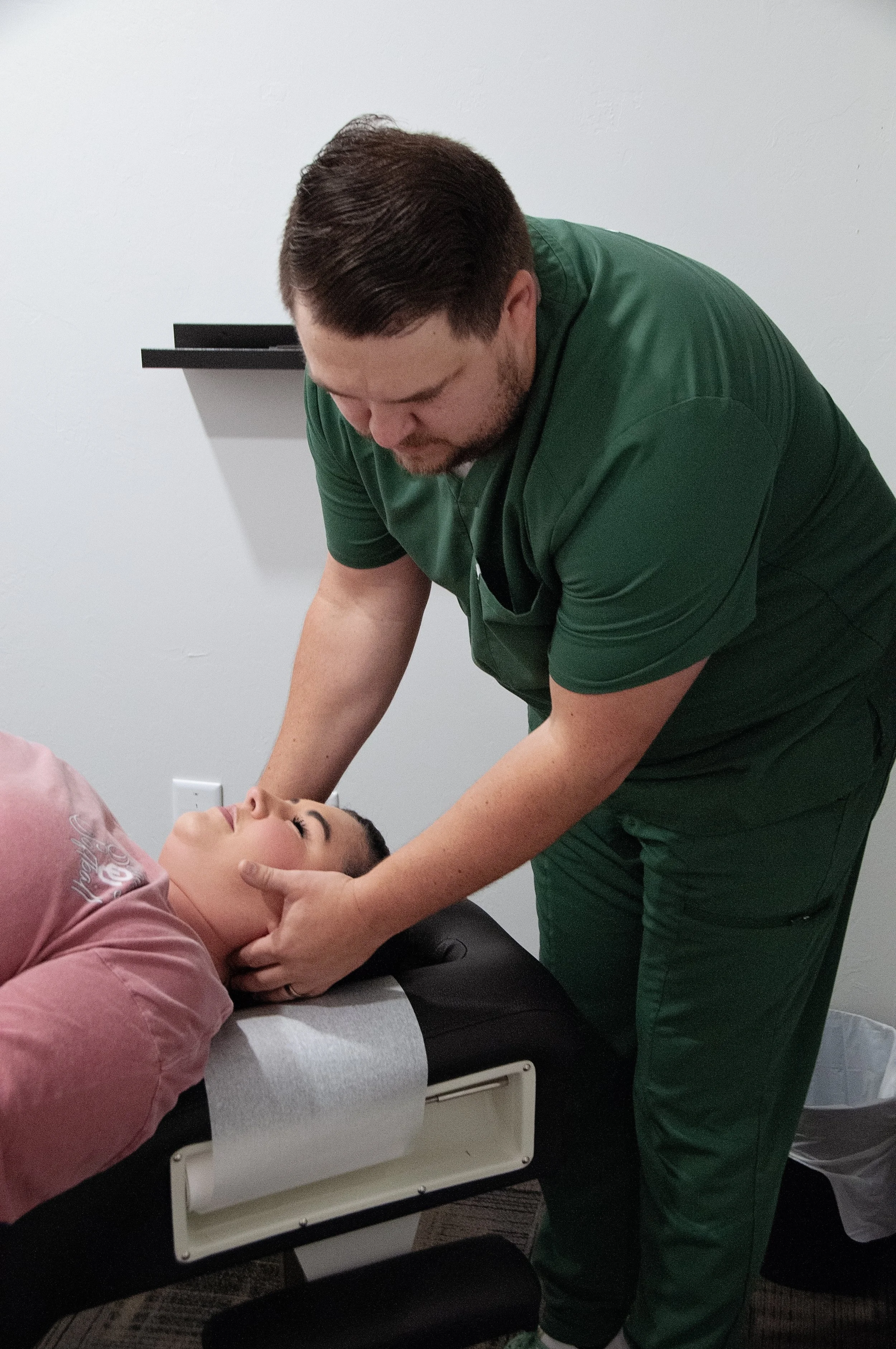
The Webster Technique® is a specific chiropractic analysis and adjustment developed for pregnancy. It reduces tension on the ligaments attached to the pelvis so the pelvis can rest in balance rather than torque. It is a registered credential issued by the ICPA, not something every chiropractor is trained in; Dr. Edwards completed it specifically to serve pregnant mothers and pediatric patients.
Two ligaments do most of the work. “There's one called your sacrotuberous ligament that kinda helps your sacrum or tailbone to move as you're getting ready to deliver the baby,” Dr. Edwards explains. “We also work on the round ligaments in the front that help take a lot of pressure off the belly.”
“A balanced pelvis is more comfortable to live in, and easier for the baby to settle into the position nature intended.”
Treating the cause, not the symptom
“We're not treating your sciatica. We're treating the shift in the spine that's putting the pressure on the nerve that's causing these symptoms.”
“It's important to focus on what's causing the issue, not the issue itself.”
Dr. Jake Edwards
What moms feel
Which pregnancy symptoms bring moms to a chiropractor?
The discomforts below are the ones that bring most moms in. Care aims at the cause underneath them, not the symptom label.
Sciatic nerve pain
Shooting pain down the leg often traces back to pelvic positioning.
Lower back ache
The lumbar curve changes as baby grows; surrounding muscles overwork to compensate.
Hip and pelvic discomfort
Relaxin loosens ligaments and joints, and stability goes with them.
Round ligament pain
The sharp catches when standing up too fast or rolling over.
Sleep that doesn't happen
Discomfort at night usually precedes discomfort by day.
Tension and fatigue
A nervous system under chronic strain tires faster.
For the nervous first-timer
Is chiropractic safe during pregnancy?
Yes. There are no known contraindications to chiropractic care throughout pregnancy when performed by trained professionals. And it's gentler than you've been led to expect.
Not what you saw on social media
“It's not like the videos you see on TikTok and YouTube sometimes. Sometimes it's a lot more gentle than a normal adult adjustment,” says Dr. Edwards. “It's more the stretching and getting things loosened up and preparing your body for what it's about to go through.”
Only the pressure needed
“I put as much pressure as we need to to get it to move and no more. Like, I'm not just pushing as hard as I can to make something move.” Everything is explained before it happens.
A set-up made for the bump
A pregnancy-specific table and pillow system supports you fully: no pressure on the belly, no awkward angles, at any stage of pregnancy.
Your care team stays in the loop
Many patients arrive referred by OBs, midwives, and doulas, and we're happy to communicate with your providers. Chiropractic care is not a substitute for prenatal medical care.
What the research suggests
How quickly do moms tend to feel relief?
In a prospective cohort study of pregnant patients under chiropractic care, reported improvement built steadily over time:
52%
reported improvement at 1 week
70%
at 1 month
85%
at 3 months
90%
at 6 months
The same body of research suggests roughly 80% of pregnant patients experience pain relief, and regular prenatal care is associated with 25 to 30% shorter labor times. None of this is a guarantee of an individual result; it is the honest shape of the evidence.
Results may vary. This content is informational and not medical advice. Consult your provider before beginning any new care.
Dr. Jake with revive in Moore is not only excellent at chiropractics but you can tell he cares about you as if you were family. It's good when you have a professional that can do their job but they make me feel like part of the family.
A fantastic experience from start to finish! The office is spotless and incredibly welcoming. The staff is professional and friendly, making you feel comfortable the moment you walk in.
After delivery
Can your baby be seen here too?
Yes. Many of our newborn patients are the babies of moms we cared for through pregnancy, sometimes checked within their first days. See how gentle infant checks work.
Asked by expecting moms
Prenatal and Webster Technique® questions
Is chiropractic safe during pregnancy?
Yes. There are no known contraindications to chiropractic care throughout pregnancy when it is performed by trained professionals, and Dr. Edwards is Webster Technique® certified specifically for prenatal care. Everything is explained before it happens, and nothing presses on your belly.
When should I start prenatal chiropractic care?
Any trimester, as soon as you know you're pregnant. Webster pillow positioning typically begins around 12 weeks, but that's not a barrier to starting care earlier. Starting early gives your body a longer baseline; many moms simply start when discomfort shows up.
What is the Webster Technique®?
A specific chiropractic analysis and adjustment developed for pregnancy. It reduces tension on the ligaments attached to the pelvis, and a balanced pelvis is more comfortable for mom and gives baby room to settle into position.
Is the Webster credential real?
Yes. It is a registered credential issued by the International Chiropractic Pediatric Association that requires specific training and ongoing certification. Not every chiropractor holds it; Dr. Edwards completed it specifically to serve pregnant mothers and pediatric patients.
How do I lie on the table with a bump?
A pregnancy-specific table and pillow set-up supports the belly completely, with no pressure on the bump and no awkward angles. Most moms say lying down comfortably is the best part of the visit.
How quickly will I feel relief?
Research suggests roughly 80% of pregnant patients experience meaningful relief, and many mothers feel a difference within the first one to three visits. Your pain pattern, trimester, and history all factor in, so we will give you an honest read after your exam.
How often will I be seen?
Cadence increases approaching delivery because the body changes fastest in the final weeks. It stays slightly elevated for the first weeks postpartum while relaxin clears, then returns to wellness or active care depending on where you are.
How long should postpartum care continue?
Relaxin, the hormone that loosens ligaments and joints for birth, takes about eight weeks to fully leave the system after delivery, per Dr. Edwards. Many mothers continue through the first few months and some stay on a maintenance cadence.
Will my OB or midwife support this?
Most do. Many of our patients arrive referred by OBs, midwives, and doulas, and we are glad to coordinate with your providers on request. Chiropractic care is not a substitute for prenatal medical care.
Can my baby be seen here too?
Yes. REVIVE is a whole-family practice, and many of our newborn patients are the babies of mothers we cared for through pregnancy. See our chiropractic for kids page for how gentle infant checks work.
Wherever you are in the journey
Schedule a visit, or call us first to talk through where you are. We'll tell you honestly what care could look like from here.